
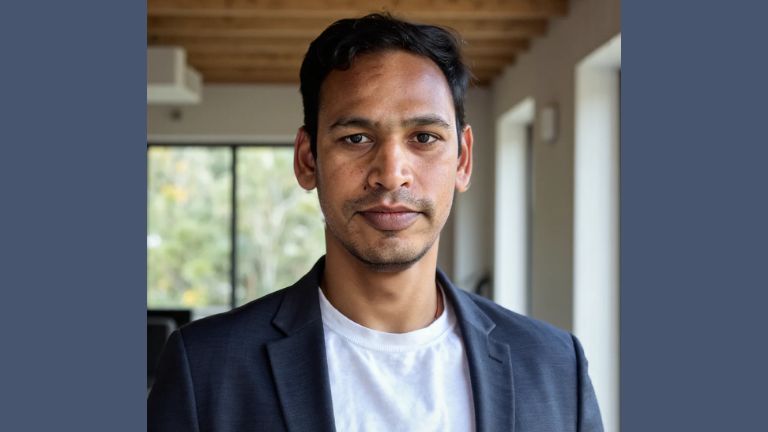
Mr. Dileep Kumar Rai – USA
by Priyanka Vaidya, 19 sep 2025
An Exclusive Conversation with Priyanka Vaidya, Editor –in-Chief of LEADERSTODAY, Unveiling the Remarkable Journey of Dileep Kumar Rai is Expertise of Global Supply Chain Optimization and Design Expert
The Leaders Today Magazine sat down with Dileep Kumar Rai, a globally recognized digital transformation and supply chain leader. From driving multimillion-dollar Oracle ERP implementations to reshaping global operations across publishing, aerospace, and healthcare, Rai’s journey is a masterclass in resilience, innovation, and empathetic leadership.
Who has influenced your life and leadership style most profoundly?
Rai: My parents have been my most decisive influence. They taught me discipline, humility, and the courage to persevere through adversity. Professionally, I’ve been inspired by leaders such as Satya Nadella, whose ability to blend empathy with vision resonates with my own philosophy. Their examples remind me that leadership is not about control but about empowering others and leaving a lasting impact.
When the options are unclear and the risks are great, how do you make challenging decisions?
Rai: In large-scale ERP transformations, uncertainty is inevitable. I approach such decisions with three guiding principles: gather and analyze the best available data, listen to diverse perspectives, and then commit with conviction. Leadership means not only making the call but also taking responsibility for its outcome. Once the direction is set, I communicate clearly, ensure my team feels supported, and stand firmly with them through challenges.
Which book has influenced your perspective the most?
Rai: The Alchemist by Paulo Coelho has been especially meaningful. The message that each of us has a personal legend and must pursue it despite obstacles reflects my career journey. Implementing global transformations often meant navigating skepticism and resistance, but I’ve come to see those obstacles as stepping stones. The book reinforced my belief that true purpose is achieved by embracing the journey, not just the destination.
What is the biggest sacrifice you have ever made for your career?
Rai: The greatest sacrifice has been time with my family. Driving international ERP projects required long hours, travel, and continuous problem-solving. Yet I always kept the bigger picture in mind: these projects created systems that improved efficiency and resilience across industries. My family’s unwavering support gave me the strength to make those sacrifices, and it also shaped me into a leader who values empathy and balance.
Which values would you like to pass on to the next generation?
Rai: I would emphasize integrity, innovation, and inclusivity. Integrity is the foundation of trust, innovation allows us to adapt and thrive in uncertain times, and inclusivity ensures that diverse perspectives are brought to the table. These values are not just principles for business; they are guiding lights for building societies that are sustainable and just.
How does your personal life and family affect your leadership style?
Rai: My family has made me a more patient and empathetic leader. At home, I’ve learned that listening often matters more than speaking, and that growth happens when people feel valued. I bring that same mindset to my teams: creating a culture where individuals feel empowered, supported, and trusted. Family reminds me that leadership is not about pushing harder but about nurturing potential.
How would you differentiate your leadership style from others?
Rai: I describe my style as transformational, anchored in empathy. While I am driven by measurable outcomes, efficiency gains, cost savings, and stronger operations, results are sustainable only when people embrace change. For example, during the Oracle ERP transformation at Hachette Book Group, the success lay not just in millions of dollars saved but in how we engaged teams, trained staff, and built confidence in the new system. Many leaders focus only on results; I focus on both people and outcomes.
Which three attributes were most important to your success as a leader?
Rai: Resilience, to persist through complex, high-stakes projects where failure was not an option. Vision, to see beyond immediate challenges and design strategies for lasting success. And Empathy, to understand that behind every process are people whose trust and collaboration determine whether change endures.
Looking ahead, what is your vision for the future of leadership and supply chains?
Rai: The future of supply chains will be defined by resilience, sustainability, and global collaboration. Leaders must ensure that systems are not only efficient but also adaptable to disruptions and aligned with broader social and environmental goals. Leadership itself is shifting toward authenticity. People want leaders who are visionary but also human, who deliver results while staying true to values. My vision is to leave behind not only optimized systems but also empowered people and greener, stronger supply chains for generations to come.
Closing Thoughts
Dileep Kumar Rai’s journey is a reminder that transformation is not only about technology and processes but about people, values, and legacy. By combining resilience with vision and empathy, he has redefined what it means to lead in uncertain times. In a world searching for leaders who can navigate complexity with wisdom, Rai’s story stands as proof that purpose-driven leadership creates impact that endures.