
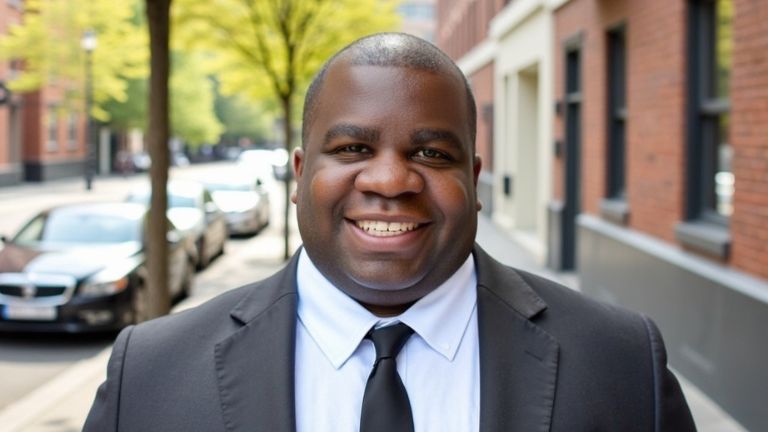
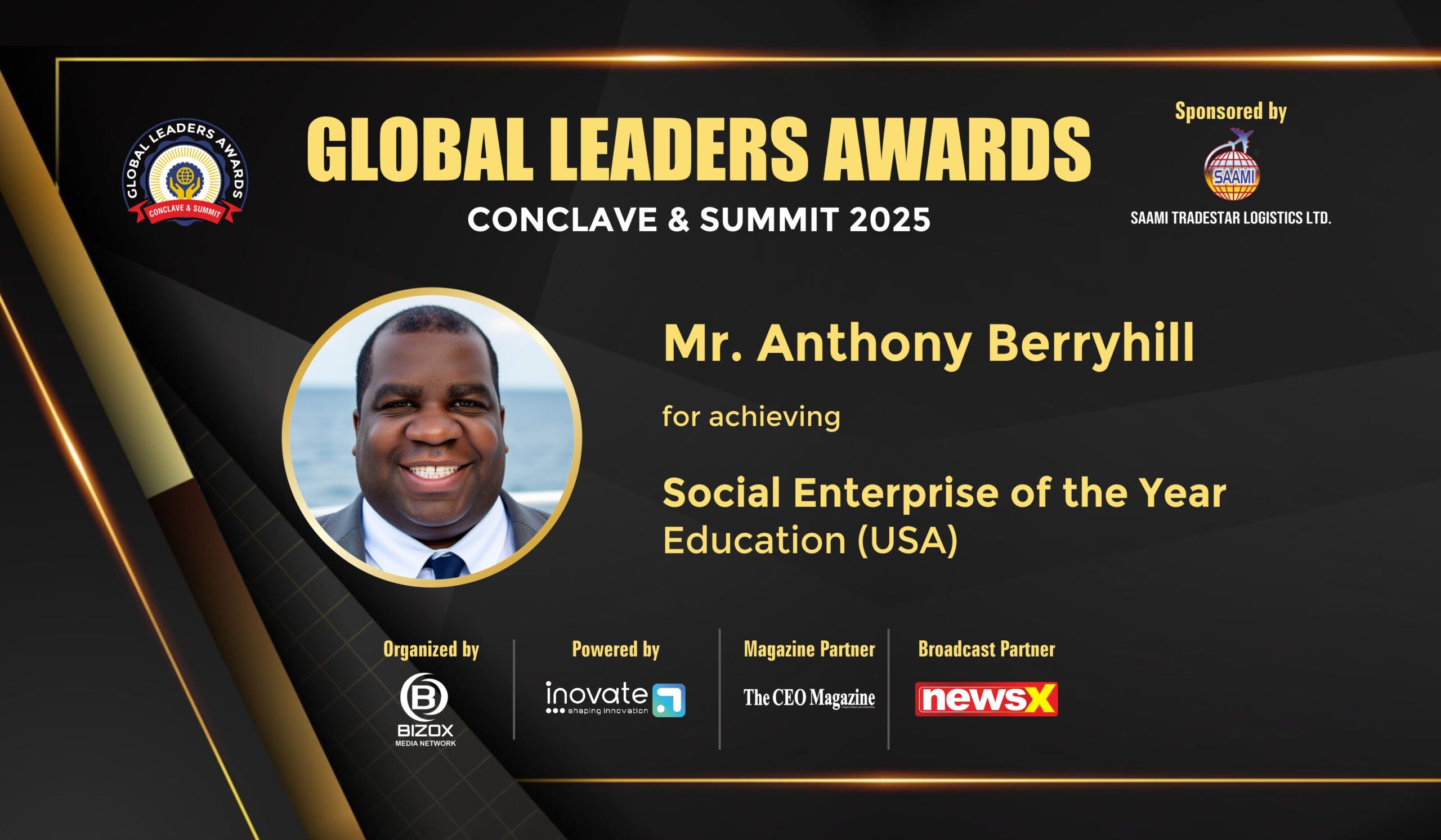
Mr. Anthony Berryhill – USA (Global Leaders Awards – Conclave & Summit 2025) Malaysia.
24 Dec 2025 by The Leaders Today
Who has influenced your life and leadership style most profoundly?
My mentors over the years have been the strongest influence. Of particular are Prof. Minh A. Luong, who I met when I started coaching national championship debate and who was a professor at Yale. I worked with him for five summers as an Instructor for the program now called the Yale Young Scholars Program for High School Students (it was called the “Yale Grand Strategy Program”). His leadership style was strongly collaborative and expertise driven. He hired and valued people who were experts at what they did and had strong ethical judgment. Results mattered, but character matters far more— people with strong results + credentials but behaved as jerks were fired. Companies need to echo that approach.
I have adopted the same ethos in my own leadership work. I look beyond the typical biases of extroversion, high social status (in a space), “executive presence,” talent, and other prejudices that sadly define most people’s understanding of leadership. I look to character first, and then I assess someone’s abilities. Also, in my leadership style I believe leadership is learned/taught, not something you are born with. When we explain the specific behaviors of leadership such as othercenteredness, advocating for those being mistreated, being the quiet voice in the room asking the essential but challenging tough question, etc. leadership becomes accessible to all. Prof. Luong, post-his passing, has continued to impact me in my own actions and all those I teach, train, and coach.
When the options are unclear and the risks are great, how do you make challenging decisions?
The first task I do is to engage in self-care and self-noticing. These are not terms we normally use when talking about making decisions but they are critical. In terms of self-care, I notice when I am reacting emotionally to a high-risk situation and I pause to make certain I am thinking soberly. I then reflect on the key priorities, making sure to eliminate “nice to have” or “non essential” tasks.
Finally, I think about ethics – I push myself to make the “right decision” especially if its unpopular or challenging. One question I ask myself with a tough question is the transparency test – would an ethical outsider agree with or understand the rationale of a tough decision.
Which book or piece of fiction has influenced your perspective the most?
This may be an unexpected answer but it’s the science fiction book, Ender’s Game. I first read the book when I was 8. It influenced me because it showed a lot of the key parts of authentic leadership, even if not identified as such. First, leaders don’t have to be the most physical or socially dominating person-per typical stereotypes about the nature of leadership. Ender was a physically small, but highly resistant and resilience leader—so much so that when he had to handle bullies or violence, he did so. He had a level of strength that those in that story didn’t realize until later. Second, he was willing to shoulder the burden of responsibility including the severe pain from doing what he was asked. Finally, he was an ethical leader—in the scifi story, dedicating his life to undo the damage of his choices (although deceived when doing so).
What is the biggest sacrifice you have ever had to make for your job or career?
The biggest in terms of ethical leadership has been financial stability. There have been many opportunities to literally ‘sell out.” In debate that can include judging national rounds and knowing that voting against a top team could end up costing you a job—as which happened to me during Stanford. In my pre-PIMCO HR career I often lost promotions and risked termination for refusing to act like an HR manager who made senior leaders happy at the expense of the welfare of the employee population. And finally, in admissions, there’s a lot more money in using scam tactics (like pushing “passion projects” for 50-100k, vs demanding that students write proper applications with academic rigor.
Most recently—after two clients “stiffed” me on fees after asking for a payment plan, I was cash poor. A couple of twins found me from social media and there was $20,000 potentially on offer if I was willing to write their essays for them. I immediately refused, losing the offer, despite being in financial distress from other clients’ actions. While it’s comfortable—and popular—to lie, cheat, and get rich from unethical behavior, that’s not leadership.
Which values would you like to pass on to the next generation?
I’d like the next generation to keep doing what they are doing now, which is demanding honesty, authenticity, and systems/employers that actually have their well being at heart. I think Google made a tragic error by getting rid of their ‘don’t be evil’ principle—as it seems the rest of high tech has too—in so doing, they started a path that has caused Gen Z and Alpha and future generations to lose all faith in business leadership (and rightfully so given rollbacks on RTO, firings of people following the 2 week notice rule, etc.).
And while the private sector and hiring systems continue to fail to act in integrity, it is actually the next generation which will pushback on such practices and demand true leadership. That fact gives me great optimism.
How does your personal life and family affect your leadership style?
Honestly, my personal life and family situation has been pretty traumatic because of my personal background. As an African American male from the inner city of New Orleans, there have been a lot of pressure to be one type of leader: a physically dominating, deep voiced, “Alpha Male.” And yes that norm was even enforced in my early HR roles with punishments for not being a stereotype.
My leadership style has been created by the inverse of that toxic persona. I am both hyperanalytical and hyperempathetic – reading people and situations by both a systems approach, and an understanding of social psychology and influence I developed as a debate coach and through my psychology classes at Stanford. This combination eschews nonsense performative virtue signalling in favor of a results-oriented approach to leadership that helps people feel heard, motivated to succeed, and focused on key priorities and OKRs.
How would you differentiate your leadership style from others?
My leadership style is based on influence, not control. I never raise my voice, engage in psychological violence, or use negative feedback as a weapon. Instead, I align my leadership practices to the goals decided upon, both in organizations and for each individual. When those two things don’t align, it is my job to force the tough conversation. For example, I have spoken up and put up resistance when businesses want to exploit employee passion and effort by lying about promotions or in performance reviews. I have also “put my foot down” on onboarding programs that were aligned to senior leader norms and not the learning needs of upcoming talent.
One could say, then, that my leadership style is different from others because it violently opposes “getting along to get along” as the idiom goes. My leadership style is first and foremost about ethics, authenticity, and using those two levers to achieve results at scale.
Which three personal attributes do you think were most important to your success as a leader?
Three key attributes, as mentioned earlier. First, integrity. If you don’t stand for something of value you will allow and do anything. Second, othercenteredness. I can’t, as a leader, ethically demand something out of someone without aligning that to their life goals, values, and beliefs. Third, don’t cheat. A “leader” who hurts other people for self gain is just a villain, not a transformative figure. And too many senior executives in corporate HR, core business functions—and in education itself—engage in “heel turns” as if they are a wrestler–not leadership. I have been successful because I demand that I—and all those I am aligned with—do things the right way, even when no one is looking. That reputation is why my company has survived for more than a decade on a referral only basis, and also why I succeeded as a client service leader with NY Mid-Market Private Equity firms. When people know you actually care about results—and treating them well—they are the ones who will call you a leader, even when you don’t think of yourself as one.