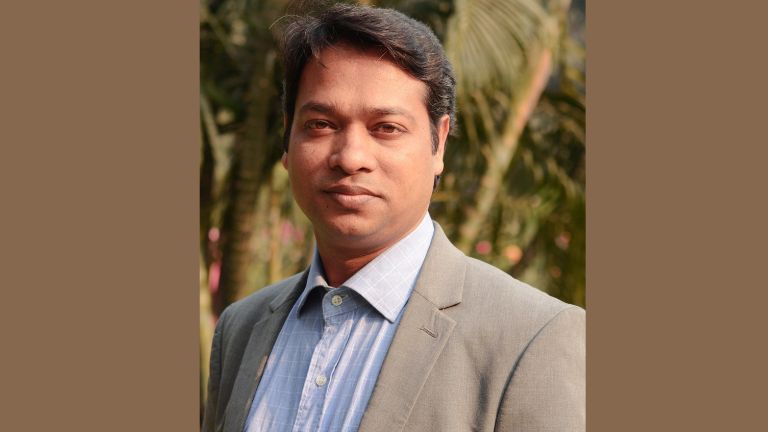
Mr. Abdul Awal Chowdhury, New York (Global Leaders Awards – Conclave & Summit 2025)
by The Leaders Today, 14 Nov 2025
Mr. Abdul Awal Chowdhury
Writer
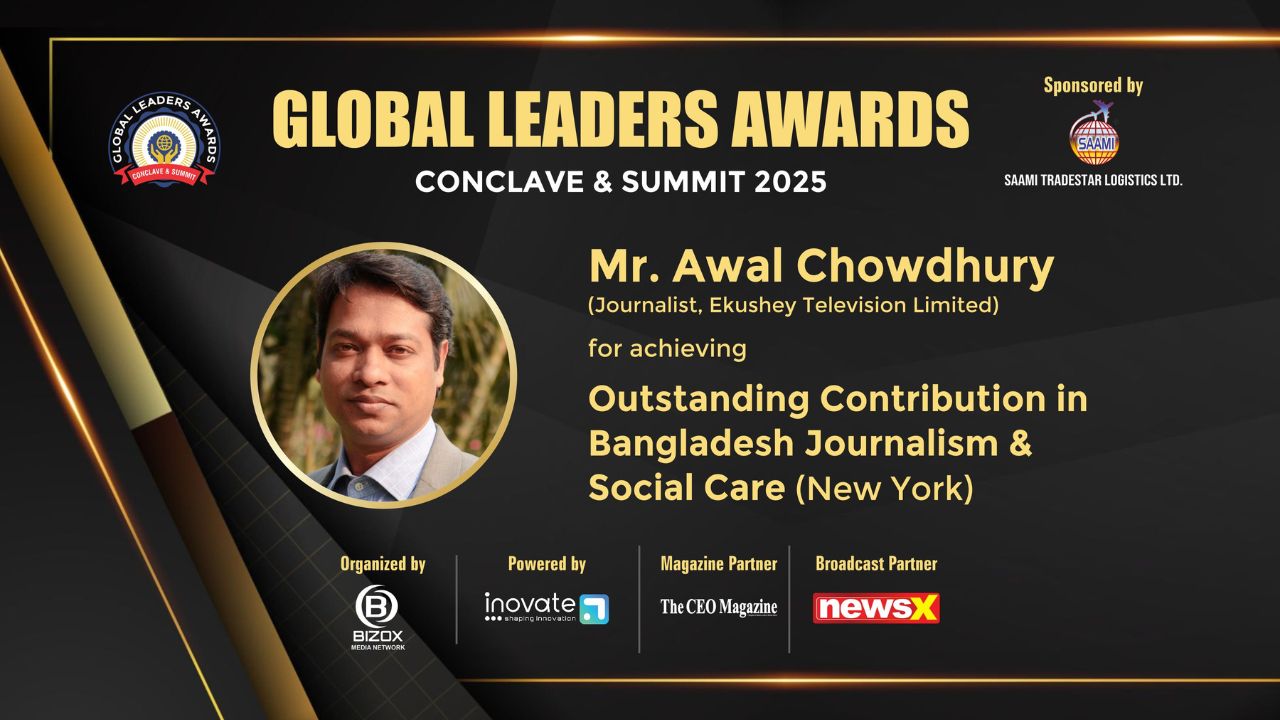
Awarded by Bizox Media Network as a “Outstanding Contribution in Bangladesh Journalism & Social Care” at Global Leaders awards 2025– Conclave & Summit recently held in Kuala Lumpur, Malaysia.
The Global Leaders Awards 2025 is one of the world’s most distinguished corporate recognition platforms, celebrating exceptional leaders, visionary companies, and outstanding organizations for their innovation, perseverance, creativity, performance, and excellence.
Mr. Awal Chowdhury
Awal Chowdhury is an accomplished Bangladeshi writer, journalist, and social leader with over two decades of experience in political, economic, and broadcast journalism. He has worked across television, print, and digital media, earning national and international recognition for his integrity and commitment to truth. As Editor-in-Chief of nymorning.com, he leads a team devoted to credible and community-driven reporting. He regularly covers major international conferences, including sessions of the IMF, World Bank, and United Nations. In 2015, he founded a social organization supporting underprivileged communities. His acclaimed book, presented at the Ekushey Book Fair, reflects his deep social awareness and literary passion. Awal is a member of The National Press Club (U.S.), Society of Professional Journalists (SPJ), and South Asian Journalist Association (SAJA).
Who has influenced your life and leadership style most profoundly?
The people who have shaped my leadership the most come from three spheres of my life- my family, the people I met through journalism, and the moral example of Nelson Mandela.
From childhood, my mother taught me the power of compassion and patience. My father taught me to never compromise with falsehood. These two values became the foundation of my leadership mindset.
Journalism introduced me to countless people whose lives were defined by struggle—marginalized families, workers, survivors of injustice. Their resilience shaped my understanding of humanity more than any textbook ever could. They taught me what it means to stand with people when they have no one else.
Mandela remains my lifelong inspiration. His life taught me that love for people is the strongest form of leadership. No matter how great the obstacles, one must never lose the courage to stand against injustice. His example shaped my belief that leadership must be rooted in empathy, courage, and moral clarity.
When options are unclear and risks are high, how do you make challenging decisions?
Journalism is never a comfortable profession. For the past eighteen years, I have worked through uncertainty, pressure, and moments of great personal risk. Many times, the information was incomplete but the responsibility was immense.
In challenging situations, I remove emotion first and try to identify the core of the problem. I analyze whatever information I have, listen to diverse perspectives, and consider the human impact of each possible decision.
My guiding principle is simple: if a decision aligns with truth, justice, and public interest, I choose it—even if it comes with personal cost. Risk is unavoidable, but I believe that when the moral compass is steady, decisions do not lead us astray.
Which book or piece of fiction has influenced your perspective the most?
My worldview has been deeply shaped by both literature and political analysis. From a young age, I grew up with books—Bengali novels, world classics, and global political writings.
George Orwell’s 1984 opened my eyes to the dangers of authoritarian power and the fundamental value of truth. As a journalist, this book became a reminder of why independent media is essential for democracy.
But the most life-changing book for me was Nelson Mandela’s ‘Long Walk to Freedom’. His ability to forgive after unimaginable suffering showed me what moral strength truly is. This book taught me that leadership must be centered on humanity, not power. It influenced the very core of how I lead and why I continue to believe in justice-driven journalism.
What is the biggest sacrifice you have ever made for your career?
Choosing journalism meant sacrificing comfort, stability, and personal time. I have missed family events, holidays, and sometimes even ignored my own health because the truth could not wait.
One of the most painful experiences in my career was covering the devastating fire in Chawkbazar, Dhaka February 2019, where nearly a hundred people died. I spent seven days at the site—collecting information, comforting survivors, and reporting the reality the world needed to see. The screams, the wounds, the grief—those moments stayed with me forever.
There are countless such incidents that left a mark on my heart.
Writing books, producing investigative reports, and running a social organization never came with financial comfort. The greatest sacrifice has been personal safety. But I believe that meaningful change requires sacrifice. Journalism is not just my profession—it is a responsibility I carry for society.
Which values would you like to pass on to the next generation?
I want the next generation to learn three central values:
Courage – so they can stand for truth even when it is difficult.
Compassion – so they can feel the pain of others as their own.
Equality – so they can build a world where dignity is not determined by privilege.
I have seen, through my own work, that love for humanity is more powerful than authority. You do not need a high position to change someone’s life—you just need one compassionate decision.
How does your personal life and family influence your leadership style?
My family shaped the moral framework of my leadership. My father Abdul Hai Chowdhury was known in our community for standing by people in distress. From him, I learned that leadership begins with responsibility, fairness, and empathy.
My personal struggles reinforced my leadership. Throughout my career I have led journalist groups, mentored young reporters, and raised my voice for media freedom.
Covering homeless individuals and marginalized groups made me realize that leadership must extend beyond storytelling. In 2015, I founded LAMP Bangladesh, a social organization that started with fifty volunteers. During the COVID-19 crisis, we reached nearly one million people with awareness campaigns and delivered food assistance to hundreds of families.
Today, even while living in the United States, I continue my mission through journalism and public service. I currently serve as the General Secretary of the America Bangladesh Journalist Forum.
My family and personal experiences did not weaken me—they strengthened my leadership and shaped my commitment to a just society.
How would you differentiate your leadership style from others?
My leadership style has evolved primarily from my work in journalism. Journalism taught me to listen deeply to people’s stories, stand firmly for truth, and remain accountable to society. As a result, my leadership is rooted not in authority but in facts, integrity, and a profound respect for people.
Through years of field reporting, I realized that leadership is not about giving orders—it is about understanding people’s needs, valuing their voices, and creating opportunities for their potential to grow. My approach to leadership is shaped by this journalistic culture.
My differences stand in three areas:
* I listen—because every human story expands leadership.
* I share responsibility—not authority.
* I measure leadership by collective progress—not personal achievement.
Journalism set me on this path, and my community work, social engagement, and human-centered values have made that path even stronger.
Which three personal attributes were most important to your success as a leader?
- Empathy From the very beginning of my journalism career, people’s pain touched me deeply. This empathy pushed me toward community-centered reporting and humanitarian leadership.
- Resilience I have been criticized, threatened, challenged, and repeatedly pushed to my limits—but I never stopped. Every setback strengthened my resolve.
- Commitment to Truth
I have never compromised with truth. This commitment built trust—and trust is the foundation of strong leadership.
Ending Vision
I imagine a world
where freedom belongs to everyone,
and the media can breathe openly, speaking truth without fear.
A world without discrimination,
where love becomes the greatest strength,
and leadership is defined not by power, but by humanity.
This is the world I dream of.